Table of Contents
Thank you! Your submission has been received!
Oops! Something went wrong while submitting the form.

Published:
Choosing the right software development approach shapes everything from software architecture to deployment speed and scalability. The right software development methodology improves workflow optimization, supports DevOps practices, and helps teams manage technical debt with better engineering maturity.
This article explores modern software delivery models, cloud-native development, AI-assisted development, and practical strategies behind the best software development services that help align development workflows with business goals.
Every software development approach depends on product goals, software architecture, delivery workflows, engineering maturity, scalability needs, and compliance expectations.
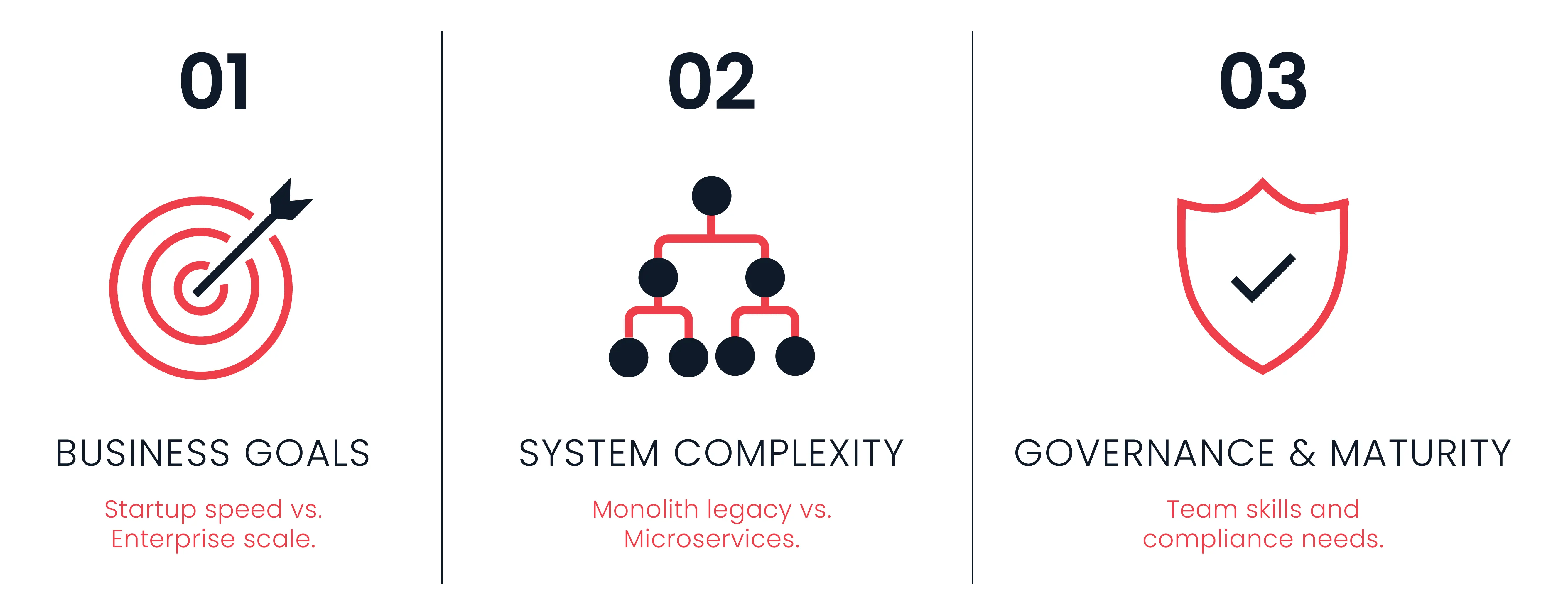
Business goals shape the entire software development lifecycle. A fast-moving startup often prefers agile methodology and continuous delivery, while enterprise software development usually focuses on release management, workflow optimization, and long-term scalability.
Clear objectives help teams choose a software development methodology that supports delivery speed, product stability, and sustainable software delivery.
Product complexity affects software architecture, testing workflows, and deployment automation. A simple internal platform may work well with a lightweight Kanban workflow.
Distributed systems with microservices architecture usually require stronger DevOps practices, CI/CD pipelines, and structured API integration planning. Complex platforms also need better scalability strategies and structured engineering workflows.
Technical constraints influence development speed and infrastructure decisions. Cloud native architecture, legacy systems, containerization, Kubernetes environments, and third-party API dependencies all affect software delivery workflows.
Teams often align their software development approach with deployment frequency, infrastructure automation, system reliability, and platform engineering requirements to maintain stable release cycles.
Engineering maturity directly impacts workflow efficiency and software quality. Experienced teams usually manage Agile workflows, sprint planning, DevOps collaboration, and continuous integration more effectively.
Teams with strong developer experience also improve code maintainability, technical debt management, software testing, and release cadence across distributed software engineering environments.
Compliance requirements shape software testing, documentation, and release management processes. Industries handling financial data, healthcare systems, or enterprise infrastructure often require structured approval workflows, audit trails, and stronger QA workflows.
These environments commonly combine DevOps practices with governance standards to support secure and scalable software delivery.
Software architecture patterns directly shape software delivery, deployment automation, scalability planning, DevOps workflows, and long-term engineering efficiency across teams.
Monolithic architecture works well for products with centralized workflows, shared databases, and tightly connected business logic. Teams often combine this software development approach with Agile methodology or Kanban workflows to maintain faster software delivery and simpler release management.
Monolith systems also support easier debugging, stable deployment workflows, and consistent code maintainability during early product growth.
Microservices architecture supports independent services, scalable infrastructure, and flexible deployment automation. This software development methodology fits teams using DevOps practices, CI/CD pipelines, containerization, and cloud-native architecture.
Engineering teams often choose microservices for distributed systems that require continuous integration, faster release cadence, API scalability, and workflow optimization across multiple services.
Event-driven architecture improves communication between services through asynchronous workflows and real-time data processing. Teams managing distributed systems often use DevOps workflows, observability tools, and infrastructure automation to support reliable software delivery.
This software development approach also improves scalability, system reliability, and operational efficiency for platforms handling dynamic user activity.
API integration requirements strongly affect software architecture and software delivery workflows. Applications connected with payment systems, cloud platforms, external services, or enterprise tools require stable release management and structured testing workflows.
Teams commonly use Agile workflows, automated testing, and CI/CD pipelines to maintain reliable integrations and smooth deployment cycles.
Scalability requirements influence software architecture, infrastructure planning, and deployment frequency. High-traffic platforms usually rely on microservices architecture, Kubernetes orchestration, cloud-native development, and platform engineering practices.
Teams managing scalable systems also focus on observability, workflow optimization, and software performance to support stable software delivery as user demand grows.
Release cadence shapes development speed, sprint planning, and deployment automation strategies. Teams releasing updates frequently often adopt DevOps methodology, continuous delivery, and automated QA workflows.
Stable release management also improves developer productivity, engineering velocity, and software testing efficiency while supporting faster feature delivery across modern software engineering environments.

Let's help you select the right software architecture, development methodology, and delivery strategy to build scalable, high-performing software that aligns with your business goals.

The way teams collaborate directly affects software delivery, engineering maturity, and the ability to choose a software development partner successfully.
The right software development approach depends on how your team handles scalability, software delivery, deployment workflows, and long-term product growth.
Every software development methodology carries different operational and technical risks. Products handling cloud-native architecture, distributed systems, or complex API integration usually need stronger DevOps workflows, observability, and deployment automation.
Teams also review technical debt, software testing readiness, and release management processes before choosing a stable software delivery model.
Delivery speed depends on how efficiently teams manage CI/CD pipelines, sprint planning, and continuous integration workflows. Agile methodology and DevOps practices help teams release updates faster through automated testing and continuous delivery.
Microservices architecture also supports quicker deployment cycles because engineering teams can update services independently without affecting the entire platform.
Budget planning becomes easier when software architecture matches product requirements from the beginning. Monolithic architecture often works well for products with simpler workflows, while distributed systems usually require more investment in cloud infrastructure, platform engineering, and infrastructure automation.
Stable release management workflows also help teams control operational costs during software delivery.
Scaling strategy affects software architecture, deployment frequency, and infrastructure planning decisions. Products expecting rapid traffic growth often depend on microservices architecture, Kubernetes orchestration, and cloud-native development.
Teams also use observability tools and workflow optimization practices to maintain software performance and stable software delivery during expansion.
A decision matrix helps teams compare software development approaches using delivery speed, scalability, engineering maturity, and software testing capabilities. Teams also review developer experience, deployment automation, and release cadence before selecting a software development methodology.
This process creates better alignment between software engineering workflows and long-term product goals.
The strongest products usually come from teams that align software architecture, DevOps workflows, scalability planning, and software delivery from the beginning. Clear engineering workflows also help teams release faster, reduce technical debt, and maintain stable product performance as user demand grows.

Yes, agile methodology supports enterprise software development across complex engineering environments. Teams often combine DevOps workflows, CI/CD pipelines, and scalable software architecture to maintain stable software delivery.
Yes, microservices architecture allows teams to deploy services independently across distributed systems. This software development approach improves release cadence, API scalability, and continuous delivery workflows.
Yes, DevOps practices support deployment automation and continuous integration across cloud-native architecture environments. Teams also improve infrastructure management, observability, and scalable software delivery through DevOps collaboration.
Yes, engineering maturity improves workflow optimization and software testing consistency across software engineering teams. Mature workflows also help teams manage technical debt and deployment frequency more effectively.
Yes, stable release cadence improves software delivery quality through structured release management workflows. Teams also maintain better software performance with continuous testing, observability, and deployment automation practices.