Software Development for Scalable Business Applications
Published:
Jul 8, 2026
Most systems break when real traffic hits because scalable software architecture and distributed systems are not applied in practice. Teams focus on features, not high-availability systems, fault-tolerant systems, or performance engineering.
Costs rise, latency grows, and reliability drops. This guide connects system design principles to software development services from architecture through operations. In this article, you will learn practical, usable patterns.
What Does Scalability Mean for Business Applications?
Scalability in business applications means a system can support growing numbers of users, data, and workload while maintaining stable performance. It depends on scalable software architecture, distributed systems, and system design principles that align with scalable business applications and enterprise application development.
In practice, scalability works through load-handling systems, horizontal scaling of databases, and cloud computing with auto-scaling. High-availability systems and fault-tolerant systems maintain uptime, while performance engineering improves latency optimization and throughput optimization as demand increases.
This is where a well-structured software services provider or software development partner helps align system design with real business growth and performance needs.
Which Architectures Support Scalable Systems Best?
The system design you choose decides how distributed systems manage growth, performance, and reliability as demand increases across real business environments.
Monolith vs Microservices Choice
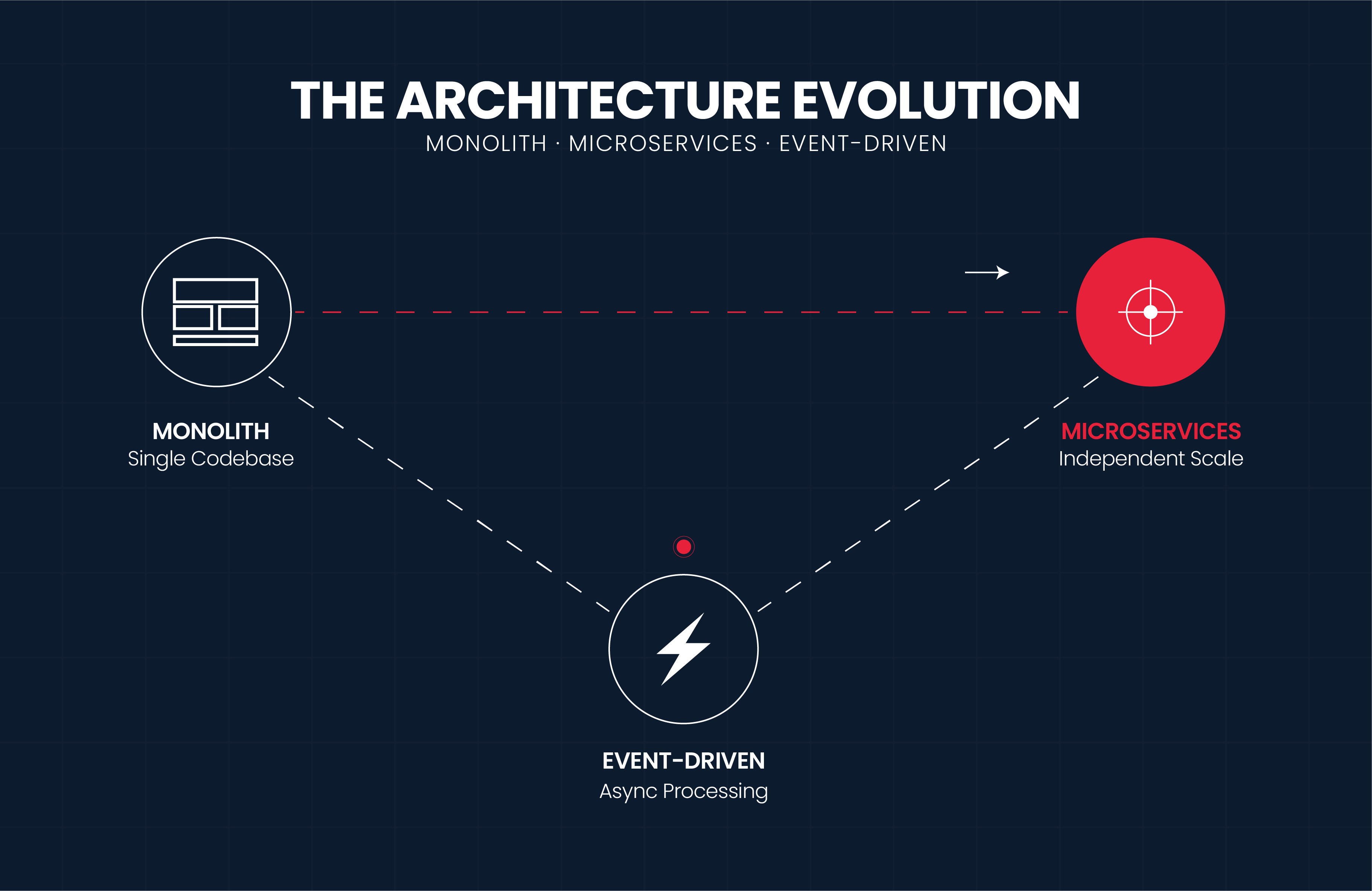
A monolithic setup keeps everything in a single codebase, which is easier to manage early on. As systems grow, microservices allow each domain to scale independently. Domain-driven design helps define clear service boundaries so each component handles a specific responsibility.
This improves loose coupling and system decoupling, which directly support load handling systems and high availability systems without creating unnecessary complexity.
Modular Monolith Architecture Benefits
A modular monolith keeps a single deployable system but structures it into well-defined modules. Each module follows domain-driven design, which keeps responsibilities clear and maintainable.
This approach allows gradual service extraction when scaling needs increase. It helps teams move toward service-oriented architecture without losing control, while still supporting fault-tolerant systems and stable performance engineering.
Event-Driven Architecture Basics
Event-driven architecture shifts communication to asynchronous processing. Services exchange events through message queues instead of direct calls. Kafka patterns enable reliable event streaming across distributed systems.
This improves throughput optimization and keeps systems responsive under load. It also strengthens system resilience in high-traffic applications where continuous data flow matters.
API First Design Strategy
API-first design focuses on defining contracts before implementation begins. Clear schemas and versioning rules keep communication stable between services. This reduces integration issues and supports API optimization over time.
It also helps scalable business applications grow across cloud-native applications while maintaining consistency across distributed systems. This approach is widely used in software product development services where stable APIs support continuous feature delivery and system growth.
Planning to Scale Your Business Application?
Let's discuss how we can help you build a system designed for growth, performance, and long-term reliability.
As data grows, the data layer has to keep up without slowing things down while still maintaining consistency and reliability across distributed systems.
Database Sharding Techniques
Sharding splits data across multiple databases, so no single system carries the full load. With data partitioning, choosing the right shard key matters a lot. Range-based keys work for ordered data, while hash-based keys spread traffic more evenly.
This helps horizontal scaling databases stay balanced and keeps queries fast, especially in distributed databases handling large workloads.
Replication and Failover Models
Replication keeps multiple copies of data so systems stay available. In leader-follower setups, writes go to a single node, and reads can scale across others. Multi-leader setups allow writes in different regions, which helps with multi-region deployment.
When a node fails, failover shifts traffic automatically. This supports high-availability systems and strengthens fault-tolerant systems without interrupting users.
SQL vs NoSQL Decisions
SQL databases work well when structure and strong consistency are important. NoSQL databases handle flexible data and scale more easily across distributed systems. The CAP theorem explains why systems often balance consistency and availability.
Strong consistency suits financial operations, while eventual consistency fits scalable business applications where speed and availability matter more.
Caching Strategies Implementation
Caching reduces pressure on databases by storing frequently used data in memory. In-memory databases like Redis improve response time and reduce latency. Cache invalidation keeps data accurate, whether through time rules or event-based updates.
CDN caching pushes content closer to users, which improves traffic distribution and supports better performance engineering.
How Do You Design Systems for Failure?
Systems run reliably when failure is expected, planned, and handled through fault tolerance, observability, and controlled recovery across distributed systems environments.
Fault Tolerance Design Principles
Fault tolerance starts with redundancy and isolation. Services run across multiple nodes, so failures stay contained. Graceful degradation keeps core features available while non-critical paths scale down.
This approach supports high-availability systems and improves system adaptability within a scalable software architecture, making software development more reliable under changing load conditions.
Circuit Breaker Implementation Logic
Circuit breaker patterns stop repeated calls to failing services. When errors reach a defined threshold, the circuit transitions to an open state and temporarily pauses incoming requests. This prevents cascading failure across distributed systems and protects dependent services. It also improves stability in high-traffic applications where failure can spread quickly.
Retries - Timeouts - Backoff Strategy
Retries help recover from temporary issues, but they need control. Timeouts define how long a system waits, while exponential backoff increases the delay between retries. This reduces pressure on services and avoids overload. Together, these patterns improve fault-tolerant systems and support smoother recovery in real workloads.
Observability Logging Tracing Metrics
Observability gives clear insight into system behavior. Monitoring systems track metrics, log management records events, and distributed tracing shows request flow across services. OpenTelemetry helps standardize this across cloud-native applications. This setup improves performance engineering and helps teams respond quickly in distributed systems.
How Can Performance Be Optimized at Scale?
Performance at scale depends on how efficiently systems process requests, distribute traffic, and reduce latency across distributed systems and cloud environments.
Load Balancing Algorithms Types
Load balancing distributes incoming traffic across multiple nodes to keep systems responsive. Different algorithms handle traffic based on system behavior and request patterns.
Round robin distributes requests evenly across servers.
Fewer connections route traffic to less busy nodes.
Hashing keeps request consistency for specific users.
This improves traffic distribution, supports load handling systems, and keeps high-availability systems stable.
Asynchronous Processing Patterns
Asynchronous processing moves heavy work outside the request cycle so users are not blocked. Systems handle tasks in the background while keeping responses fast.
Message queues manage task flow between services.
Background jobs process long-running tasks.
Worker services execute tasks independently.
This improves throughput optimization and supports distributed systems handling continuous workloads.
API Performance Optimization
API performance improves when data transfer is controlled and request load is managed carefully.
Pagination limits response size and reduces load.
Compression lowers network usage and speeds responses.
Rate limiting controls request volume.
Throttling smooths sudden traffic spikes.
These practices strengthen performance engineering and keep scalable business applications responsive.
Frontend Performance Impact Scaling
Frontend performance directly affects how fast users experience the system across devices and regions.
Lazy loading loads content only when needed, improving initial load time.
Asset optimization reduces file sizes.
CDN caching delivers content closer to users.
This supports cloud-native applications, improves latency optimization, and ensures smooth interaction as demand grows.
What Infrastructure Choices Enable Scalability?
Infrastructure choices shape how systems grow, handle traffic, and stay reliable across regions while supporting distributed systems and cloud-native applications.
Cloud computing provides flexible resource provisioning through virtual machines, containerization, and serverless computing. Infrastructure decisions affect cost optimization, performance engineering, and system resilience across scalable software architectures and high-availability systems.
This comparison shows how IaaS, PaaS, and serverless computing differ in control, abstraction, and how they support for scaling in real systems.
Model
Control
Abstraction
Scalability
IaaS
Full control over infrastructure
Low abstraction
Flexible scaling with manual control
PaaS
Platform-managed environment
Medium abstraction
Built-in scaling with less control
Serverless
Minimal infrastructure control
High abstraction
Auto scaling with event-driven execution
Autoscaling Infrastructure Strategies
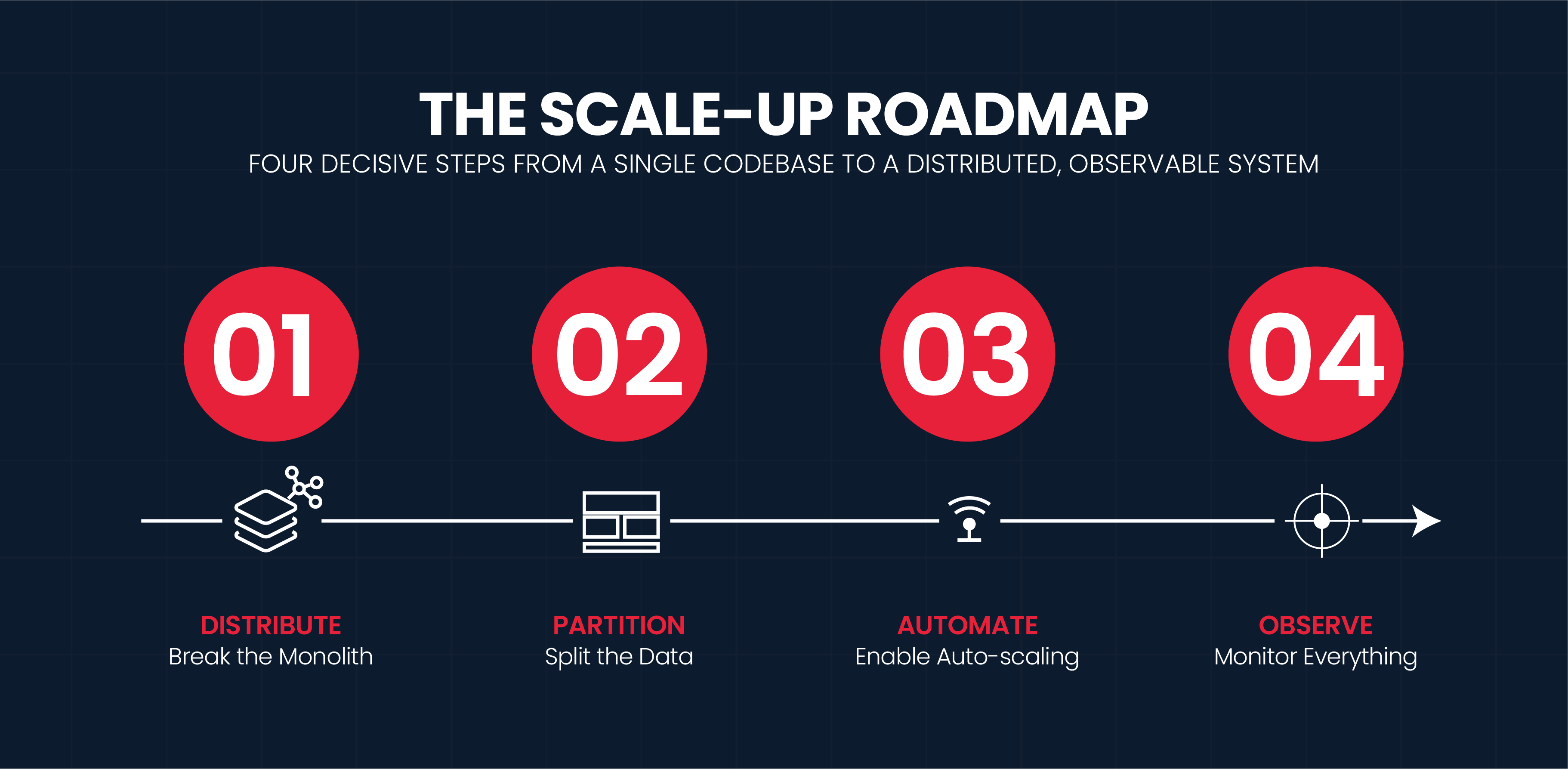
Autoscaling adjusts resources based on real-time demand. Horizontal scaling adds instances to handle traffic, while container orchestration with Kubernetes manages workload distribution. Horizontal pod autoscaling uses metrics like CPU and memory to scale services efficiently. This supports load handling systems and keeps performance stable.
Infrastructure as Code Usage
Infrastructure as Code defines infrastructure through code instead of manual setup. Tools like Terraform enable repeatable provisioning and consistent environments. This reduces configuration drift and supports DevOps automation.
It also improves resource utilization and supports scalable software development solutions across cloud-native applications and distributed systems.
Multi-Region Deployment Strategies
Multi-region deployment spreads services across locations to improve latency and reliability. Traffic routes through georouting and cloud load balancing based on user location. Failover shifts requests during regional issues, which supports fault-tolerant systems and business continuity while improving latency optimization.
What Real Scenarios Define Scalable Systems?
Real-world scalability is proven under unpredictable traffic growth, system stress, and operational failures, where architecture decisions directly impact performance, reliability, and stability.
E-commerce Traffic Spike Handling
E-commerce platforms face sudden surges during flash sales, requiring systems to handle extreme concurrency without latency or failure. This demands efficient load balancing, horizontal scaling, and caching to manage high request throughput.
SaaS Multi-Tenant Scaling
SaaS systems must balance shared infrastructure with tenant isolation. Proper resource allocation, database partitioning, and workload distribution prevent performance degradation caused by high-usage tenants.
Viral App Growth Handling
Rapid user growth, common in modern mobile app development, introduces unpredictable traffic spikes. Scalable systems rely on stateless services, asynchronous processing, and throttling to prevent bottlenecks across APIs and databases.
Scaling Failure Lessons Learned
System issues often relate to hidden bottlenecks like database overload or tightly coupled services. Strong observability, fault tolerance, and distributed system design ensure systems can recover quickly and maintain performance under stress.
Final Words
Scalable systems succeed when architecture, data, and infrastructure work together under real demand. Strong design choices improve performance, reliability, and cost control. This is where software development services turn technical decisions into systems that grow smoothly with business needs.
Key FAQ’s
What are the 4 D's of software development?
The 4 D’s represent discover, design, develop, and deliver. Teams first understand requirements, then plan system design, build features, and finally deploy and maintain scalable software in real environments.
How to develop scalable applications?
Start with a scalable software architecture, use distributed systems, apply load handling systems, and design stateless services. Combine this with data partitioning, caching, and cloud computing to handle growth while maintaining performance and reliability.
What is the difference between horizontal and vertical scaling?
Horizontal scaling adds more machines to distribute the load, while vertical scaling increases resources within a single machine. Distributed systems prefer horizontal scaling because it improves flexibility, fault tolerance, and long-term scalability.
Why is fault tolerance important in scalable systems?
Fault tolerance ensures systems continue running even when components fail. It uses redundancy, failover, and graceful degradation to maintain availability, which is critical for high-availability systems and business continuity.
How does caching improve system performance?
Caching stores frequently accessed data in memory, reducing database load and response time. It improves latency and throughput, especially in high-traffic applications where repeated data requests are common.
Muhammad Shayan Ahmad, Solution Architect and Sr Software Engineer at CodeFulcrum, bringing over 7+ years of expertise in AI-powered software architecture, full-stack innovation, and emerging technologies.