Table of Contents
Thank you! Your submission has been received!
Oops! Something went wrong while submitting the form.

Published:
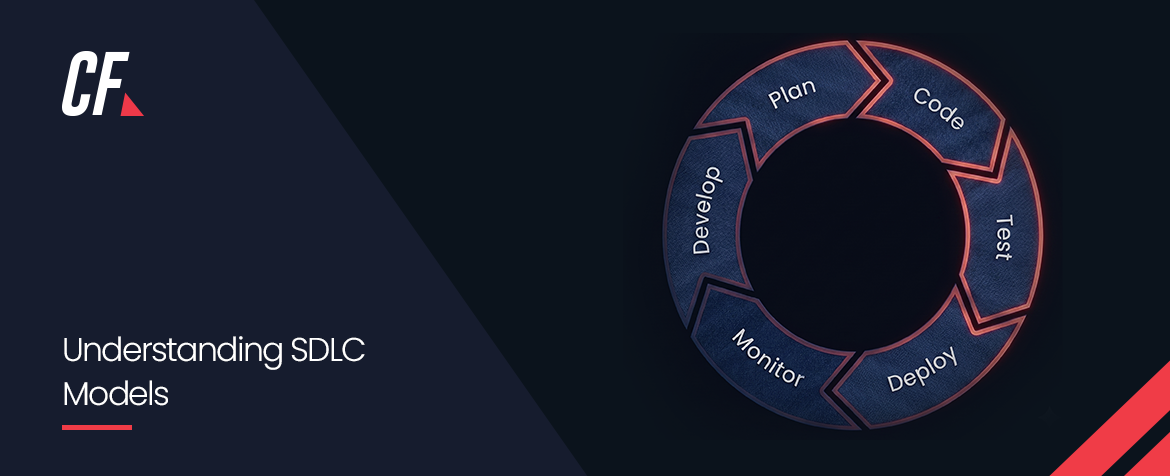
Building modern applications involves continuous planning, testing, deployment, and collaboration across development teams, and software development lifecycle models help organize that entire software delivery process efficiently.
Every project works differently, so companies choose SDLC models based on team collaboration, release cycles, scalability, and testing needs.
Today, Agile, DevOps, workflow automation, and continuous integration also shape how application development moves through deployment pipelines and modern cloud native environments.
In this article, you’ll learn how different SDLC models support software quality, project management, testing workflows, and modern software delivery practices.
SDLC models give development teams a clear way to manage software engineering projects from early planning to software delivery and long-term maintenance.
In simple terms, a software development lifecycle model is a structured development workflow. That helps teams handle requirement analysis, software architecture, coding, software testing, deployment pipelines, and quality assurance in an organized way.
Modern software engineering teams build applications through different development workflows based on release velocity, infrastructure complexity, software architecture, and deployment automation requirements across end-to-end software development environments.
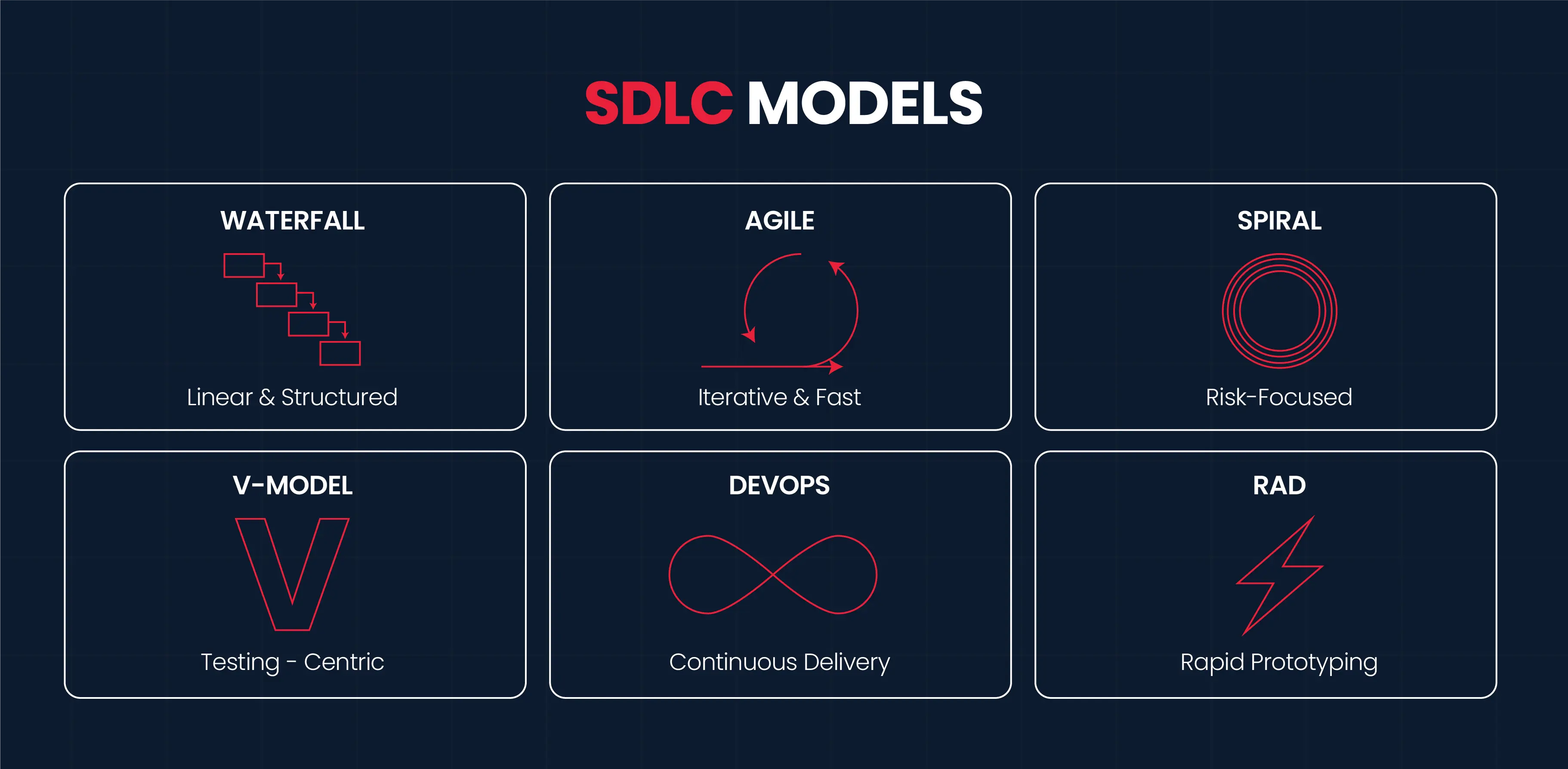
Waterfall organizes the software delivery process through fixed development stages where requirement analysis, software architecture, coding, quality assurance, and release management move in a structured flow.
Enterprise software projects with detailed compliance requirements often use this model because documentation management, approval workflows, and testing checkpoints stay aligned throughout the system development process.
Agile supports iterative delivery through shorter release cycles that keep development teams closely connected with customer feedback, backlog prioritization, and continuous improvement.
Modern SaaS platforms and cloud-native development teams often use Agile to accelerate application development, improve deployment frequency, and maintain software scalability across evolving product lifecycle management workflows.
Scrum creates a sprint-based engineering workflow where product owners, scrum masters, and development teams coordinate software testing, feature delivery, and release planning through structured collaboration cycles.
This framework helps software engineering teams manage continuous integration, workload visibility, and faster deployment pipelines while maintaining stable software quality standards.
Kanban focuses on workflow visualization and operational efficiency across software delivery pipelines. Engineering teams use Kanban boards to monitor development productivity, release management progress, testing workflows, and infrastructure automation tasks in real time.
This approach supports smoother collaboration across DevOps teams, quality assurance teams, and application development environments.
Spiral combines iterative development with continuous risk assessment throughout the software engineering lifecycle. Teams evaluate software architecture decisions, scalability planning, security testing, and integration testing during every iteration cycle.
This model fits large application development environments where performance testing, technical debt management, and deployment reliability directly influence long-term system stability.
Rapid application development speeds up software delivery through active prototyping, stakeholder collaboration, and fast feedback loops. Development teams build functional application components early, which helps product owners validate user experience, business logic, and API integration workflows before full-scale deployment planning begins.
DevOps connects software development and IT operations through continuous integration, continuous delivery, deployment automation, containerization, and monitoring systems.
Modern cloud native engineering teams use DevOps workflows to manage Kubernetes environments, infrastructure as code, observability pipelines, and automated testing across scalable software delivery ecosystems.
Hybrid SDLC workflows combine structured project governance with Agile collaboration, DevOps automation, and iterative release management.
Large software engineering organizations often use hybrid models to support cross-functional teams, compliance operations, cloud infrastructure management, and scalable deployment pipelines within complex enterprise application environments.
Continuous deployment pipelines also support feature flag management, automated build verification, and faster production feedback during application development.

We'll help you implement a development process that reduces risk, improves efficiency, and delivers reliable software.

Modern software engineering teams use SDLC models to manage software architecture, deployment workflows, testing coverage, and release stability across application development environments.
SDLC models shape how development teams maintain software quality throughout the software delivery process. Agile and DevOps workflows support continuous integration, automated testing, code review, and security in software development practices before deployment begins.
This helps teams identify API integration issues, database conflicts, and performance bottlenecks earlier in the development lifecycle.
Teams working with a microservices architecture also benefit from isolated testing environments and scalable deployment workflows that improve release management and application performance.
Different SDLC models influence how quickly software moves into production environments. DevOps workflows use deployment automation, containerization, Kubernetes orchestration, and continuous delivery pipelines to streamline software delivery operations.
Iterative development workflows also support smaller release cycles, faster rollback management, and better observability across cloud native systems.
Modern SDLC models integrate regression testing, integration testing, performance testing, and vulnerability scanning directly into the software engineering lifecycle. Continuous testing pipelines improve software reliability and support stable deployment workflows.
Engineering teams also use monitoring systems, observability platforms, and infrastructure automation tools to manage technical debt, application performance, and long-term software maintenance across cloud infrastructure environments.
SDLC models affect how development teams, DevOps engineers, product owners, and quality assurance teams coordinate software delivery workflows. Agile collaboration frameworks improve sprint planning, backlog management, and stakeholder visibility across application development pipelines.
Connected deployment pipelines and shared workflow systems also improve release coordination and communication during large-scale software delivery operations.
Scalable application development depends on SDLC models that support cloud-native development, distributed systems, and modular software architecture. Development teams often combine API integration, containerization, and infrastructure as code to manage growing workloads efficiently.
Flexible workflows also help teams adapt software delivery based on customer feedback, operational analytics, and evolving product lifecycle management goals.
Modern software development trends now combine automation, cloud infrastructure, observability systems, and faster software delivery across scalable environments.
AI-assisted workflows now support coding, software testing, and deployment analysis across modern application development environments.
This improves software quality, release management, and development productivity across cloud native systems.
DevSecOps workflows integrate security operations directly into the software delivery process across development and deployment environments.
This strengthens application security visibility and supports stable software delivery operations.
Cloud native development has reshaped how software engineering teams manage scalability, deployment automation, and infrastructure management.
These workflows improve modern software development and scale software applications efficiently.
Continuous delivery pipelines automate software testing, deployment validation, and release management throughout the software engineering lifecycle.
This improves release consistency and supports faster deployment cycles across production environments.
Modern SDLC models now rely heavily on operational analytics and observability systems during software delivery operations.
This helps development teams maintain software reliability, scalability, and stable product lifecycle management across evolving application environments.
Choosing the right software development lifecycle helps development teams improve software quality, accelerate software delivery, and manage scalable application development more efficiently.
Modern SDLC workflows now combine agile collaboration, DevOps automation, cloud-native engineering, and continuous integration to support faster deployment pipelines, stable software architecture, and long-term product lifecycle management.

Enterprise software projects often use hybrid SDLC workflows because they support compliance management, scalable infrastructure, release governance, and cross-functional collaboration across large software engineering environments.
Agile vs waterfall workflows manage release cycles differently. Agile supports iterative delivery and continuous feedback, while Waterfall follows structured development stages with detailed documentation and sequential deployment planning.
Cloud-native development environments depend on containerization, microservices architecture, infrastructure automation, and continuous delivery pipelines that require flexible software engineering workflows.
Modern SDLC workflows help development teams manage API integration, testing automation, deployment validation, observability systems, and distributed service communication throughout application development.
DevOps workflows improve software scalability through deployment automation, infrastructure as code, Kubernetes orchestration, monitoring systems, and continuous integration pipelines across cloud infrastructure environments.