Choosing custom software vs off-the-shelf solutions can feel confusing, especially when every business has different workflows, growth plans, and operational needs.
Some companies want flexibility and full control, while others prefer faster deployment and simple software maintenance.
The right software selection also affects scalability, user experience, process automation, cloud infrastructure, and data security. In this article, you will get to know how both options fit different business goals and digital transformation strategies.
What is Custom Software?
Custom software is a type of business software created for specific business requirements, workflows, and operational goals.
Unlike ready-made platforms that serve a broad audience, custom software is designed around the exact processes, user experience, and functionality a company wants for its daily operations.
Custom software projects often require experienced software development services that align with business workflows, scalability goals, and long-term operational efficiency.
Custom Software Development Process
Businesses define software requirements and operational goals.
Teams analyze business workflows and process automation needs.
Developers plan the software architecture and system structure.
Designers create the user interface and user experience layout.
Developers build custom features and API integrations.
Teams test performance, scalability, and data security.
The software deployment process moves the system live.
Off-the-shelf solutions are ready-made software products designed for a wide range of businesses and common operational needs.
These platforms are created by software providers and made available for companies that want a quick and structured way to manage business workflows, process automation, and daily operations.
Off-the-Shelf Software Process
Software providers research common business requirements and market needs.
Development teams create standardized software architecture and platform features.
Designers build a general user interface and user experience structure.
Developers add workflow automation, reporting tools, and API integration features.
Quality assurance teams test system reliability, data security, and efficiency.
The software deployment process makes the platform available to businesses.
Vendors handle software maintenance, updates, and compliance improvements.
Businesses configure the platform according to their operational workflows.
What Are the Advantages of Custom Software?
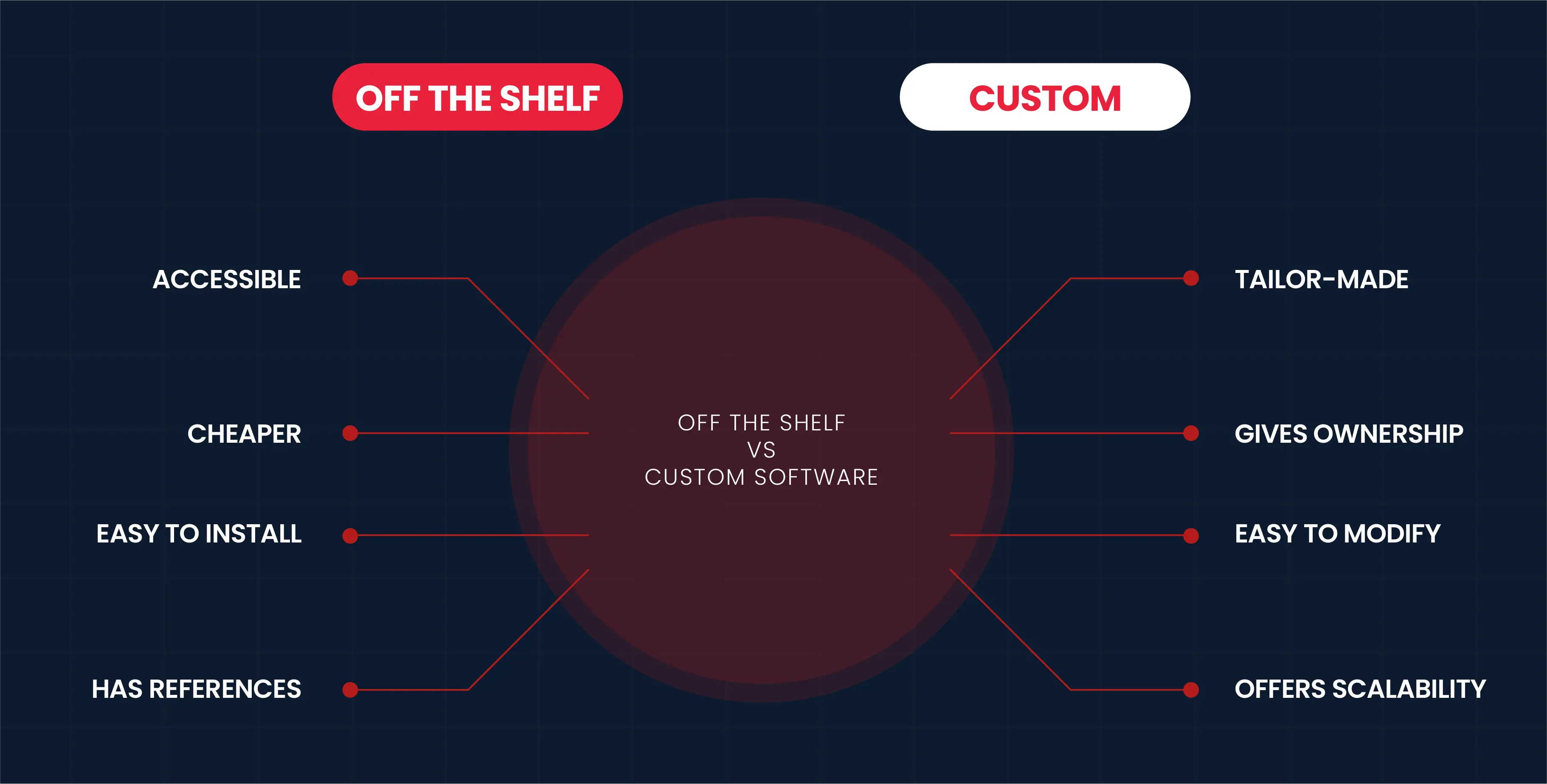
Custom software helps businesses create personalized workflows, improve scalability, strengthen data security, and maintain better operational efficiency.
Greater Business Flexibility
Custom software aligns with specific business workflows, operational goals, and technology strategies for better workflow automation and process management.
Advanced Scalability Support
Businesses can expand system scalability, cloud infrastructure, and software architecture according to changing operational requirements and growth plans.
Enhanced Data Security
Custom software supports secure infrastructure, user authentication, access control, and regulatory compliance based on business data security needs.
Workflow Optimization
Businesses can improve workflow optimization, process automation, and employee productivity through connected digital solutions and API integration.
Full System Control
Companies manage software maintenance, feature updates, software deployment, and business software functionality according to internal business objectives.
What Are the Benefits of Off-the-Shelf Software?
Off-the-shelf software helps businesses access ready-made digital solutions with faster deployment, simple management, and structured workflows.
Faster Software Deployment
Businesses can start using the software quickly because the platform already includes prebuilt features, workflows, and software architecture.
Lower Initial Investment
Off-the-shelf software usually follows subscription pricing models that simplify software selection and business budgeting for digital transformation.
User-Friendly Functionality
Most platforms include simple user interfaces, accessible dashboards, and organized workflows that improve employee productivity and user experience.
Vendor Maintenance Support
Software providers manage software maintenance, security protocols, performance optimization, and compliance updates within the software ecosystem.
Ideal Business Scenarios
These digital solutions support common business requirements, workflow automation, operational efficiency, and connected business processes across multiple industries.
Ready to Choose the Right Software Solution for Your Business?
Let's help you determine whether custom software or an off-the-shelf solution is the best fit for your goals, workflows, and long-term growth.
How Do Custom Software Vs Off-the-Shelf Solutions Compare in Cost?
The software development cost can vary depending on many factors. When businesses compare custom software vs off-the-shelf solutions, the biggest discussion usually comes down to long-term value, maintenance, scalability, software ownership, and recurring operational costs.
The table below highlights the major cost differences between custom software and off-the-shelf solutions.
Category
Custom Software
Off-the-Shelf Software
Initial Cost
$10,000 – $1,500,000+
$15,000 – $150,000+
Setup & Implementation
Included
$25,000 – $400,000
Annual Fees
$0
$30,000 / Year
Maintenance
15% – 25%
Included
CRM (Per User)
Custom
$34.77 – $175+ / User / Month
ERP (Enterprise Scale)
$500,000 – $1,500,000+
$150 – $3,000+ / Month
Hosting
$60,000
Included
Integration
$15,000
$40,000
Total 5-Year Cost
$362,500
$320,000+
Year 1 TCO
Year 2 – Year 4
Year 2 – Year 4
How Should Businesses Choose the Right Software Solution?
Choosing the right software solution becomes much easier when businesses focus on workflows, scalability goals, daily operations, and on choosing a software development partner that aligns with long-term growth plans.
Business Goal Alignment
The software should support business objectives, daily workflows, customer experience, and long-term technology strategy instead of creating disconnected business processes.
Customization Requirements
Businesses with specialized operations often need custom software, flexible software architecture, API integration, and personalized workflows that align with internal processes.
Company Size Considerations
Growing companies usually evaluate system scalability, cloud infrastructure, employee productivity, and connected software ecosystems before choosing a platform.
Implementation Timeframes
Some organizations prioritize faster software deployment, while others focus more on long-term workflow optimization, process automation, and platform flexibility.
Investment Decision Factors
Software selection also depends on the total cost of ownership, operational costs, software maintenance, performance optimization, and long-term return on investment.
How Can Hybrid Software Approaches Benefit Businesses?
Many businesses now combine custom software and off-the-shelf solutions to improve flexibility, scalability, workflow automation, and operational efficiency.
Hybrid Software Strategy
A hybrid software model allows businesses to keep specialized operations on custom software while using SaaS applications for standardized business functions like HR, communication, or CRM management.
Combined System Benefits
Connected business systems improve workflow optimization, data sharing, operational visibility, and user experience across different departments and software environments.
Custom Function Integration
Businesses often use custom software for process automation, API integration, proprietary workflows, data management, and business logic that directly support operational goals.
Packaged Tool Utilization
Off-the-shelf software helps companies handle common workflows through prebuilt dashboards, cloud infrastructure, reporting systems, and software maintenance support.
Modern Business Adaptability
Hybrid infrastructure gives businesses more flexibility to scale operations, connect legacy systems, support digital transformation, and adapt technology strategies as operational needs evolve.
Conclusion
Choosing custom software vs off-the-shelf solutions becomes much easier when businesses focus on their real operational needs instead of trends. Some teams need personalized workflows, deeper integrations, and long-term scalability, while others prefer faster deployment and simpler management.
Key FAQ’s
Can businesses use custom software with existing SaaS applications?
Yes, many organizations connect custom software with SaaS applications through API integration and hybrid software infrastructure strategies.
Which industries benefit most from custom vs packaged software?
Industries with specialized workflows, regulatory compliance requirements, and connected operational systems often benefit more from customized software environments.
How does software architecture impact long-term scalability?
Scalable software architecture helps businesses manage growing workflows, cloud infrastructure demands, connected systems, and performance optimization more efficiently.
Which software option works better for future AI tools?
Custom software usually supports AI integration more effectively because businesses can tailor workflows, automation systems, and data infrastructure around specific operational needs.
Why is interoperability important in modern software systems?
Interoperability helps different platforms exchange data smoothly, support connected workflows, and improve operational efficiency across business systems.
Muhammad Shayan Ahmad, Solution Architect and Sr Software Engineer at CodeFulcrum, bringing over 7+ years of expertise in AI-powered software architecture, full-stack innovation, and emerging technologies.