Software Development Trends Shaping Modern Applications
Published:
Jul 29, 2026
Software development trends are changing how modern applications are built and improved in real time. Today’s software work is shaped by speed, scale, and smarter ways of building across teams, systems, and tools.
As technology shifts through cloud, AI, and automation, these changes are becoming more visible in everyday development. These changes are also influencing how businesses evaluate and invest in modern software development services for future growth.
In this article, you will explore how these trends are shaping modern applications and what is driving this shift across development practices and technologies.
What Are the Key Trends in Software Development?
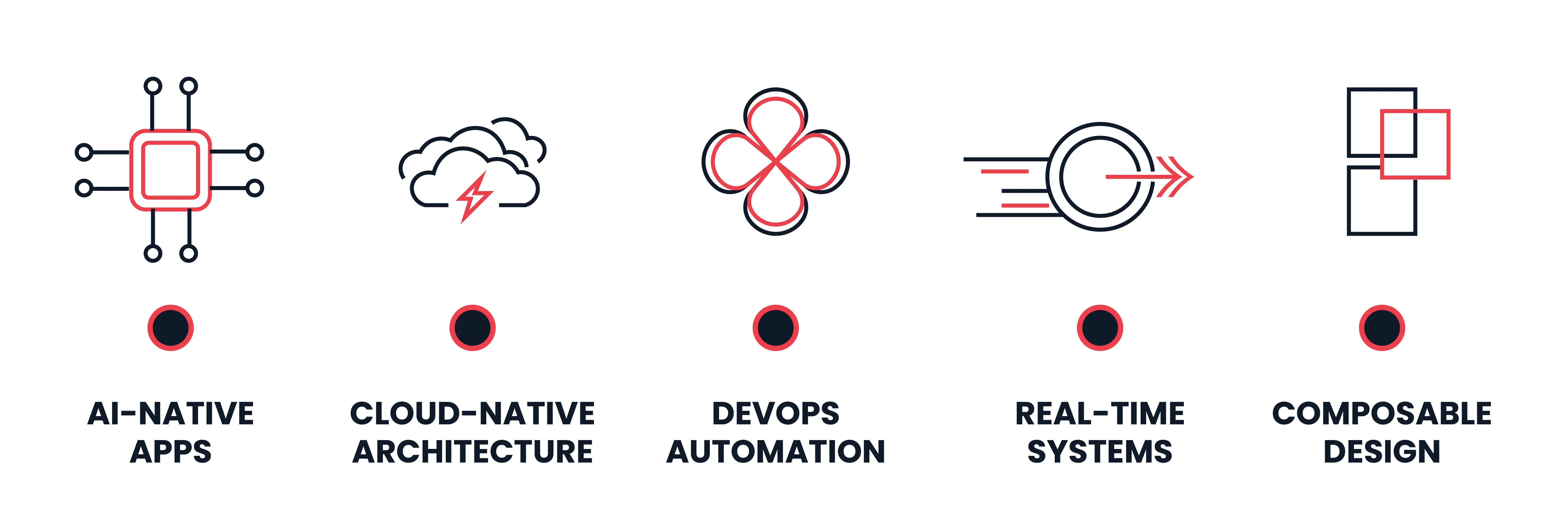
Software development is changing fast as modern applications grow in scale and complexity. Today’s trends focus on smarter systems, faster delivery, and better user experience. These shifts are strongly connected to cloud, AI, automation, and evolving software development practices.
Artificial Intelligence in Development: AI is now part of everyday software development work. It helps with coding and testing, making modern applications faster to build and improve.
Cloud Native Architecture: Cloud-native approaches help applications run in flexible environments. They support scalability, reliability, and easier deployment across systems.
DevOps and Automation: DevOps practices improve collaboration between teams and speed up delivery. Automation reduces manual work and helps maintain stable releases.
Real-time Systems: Real-time systems allow applications to respond instantly to data and user actions. This improves speed, accuracy, and user experience.
Composable and Modular Design: Composable design focuses on building software in smaller parts that can be reused. It makes applications easier to update and adapt to new needs.
Why Are AI-Native Applications Becoming the New Standard?
Artificial intelligence is among the core technologies used in software development, shaping modern applications across industries.
AI Assistants
AI assistants are now a common part of software development workflows. They support developers inside software development tools by helping with code suggestions, debugging, and planning. In modern applications, these assistants improve speed and reduce repetitive work.
Artificial intelligence here is not replacing developers but supporting them in daily software development tasks.
Autonomous Agents
Autonomous agents are changing how modern applications behave after deployment. These systems can take actions based on input data without constant human control. In software development trends, this is important because it moves applications closer to self-operating systems.
Artificial intelligence and AI-assisted development together help these agents respond in a more structured way inside modern applications.
Intelligent Testing
Intelligent testing is becoming a strong part of software development because it improves quality without slowing down delivery. In software development trends, testing is no longer only manual or rule-based.
Artificial intelligence helps identify patterns, errors, and weak points in modern applications. This makes software development more reliable and reduces issues in production systems.
Predictive Analytics
Predictive analytics is widely used in modern applications to understand user behavior and system performance. In software development, it helps teams make decisions based on expected outcomes instead of guesswork.
Artificial Intelligence supports this by analyzing large sets of data. This is now a key part of software development trends where data-driven decisions guide application improvement.
Adaptive Systems
Adaptive systems are becoming a major part of modern applications. These systems adjust based on user behavior, environment, and usage patterns. In software development, this means applications are no longer static.
Artificial intelligence and AI-assisted development help these systems respond in real-time situations and improve user experience. This reflects how software development trends are moving toward more flexible and responsive systems.
Ready to Build Software That Keeps Up with Change?
Let's help you implement modern development practices and emerging technologies to stay ahead of evolving business needs.
How is Cloud-Native Development Redefining Scalability?
Cloud native development is changing how software development builds modern applications. Instead of fixed systems, applications are designed to grow and adjust based on demand. This shift is a key part of software development trends and digital transformation.
Microservices
Microservices break applications into smaller parts. In software development, this makes modern applications easier to scale and update. Each service can grow independently, which improves software scalability and system control.
Serverless Computing
Serverless computing allows teams to run functions without managing servers. In software development, this reduces setup work and supports faster scaling in modern applications. It fits well into cloud-native architecture and software development trends focused on efficiency.
Container Platforms
Container platforms help package applications in a consistent way. In software development, these tools support modern applications by making deployment more stable across environments. This improves software scalability and system reliability.
Multi-Cloud Adoption
Multi-cloud adoption means using more than a single cloud provider. In software development, this helps modern applications stay flexible and avoid dependency on a single system. It supports cloud-native architecture and long-term software scalability.
Distributed Systems
Distributed systems spread workloads across multiple machines. In software development, this improves performance and reliability for modern applications. It is a core part of software development trends focused on scale, availability, and resilience.
Why is Software Delivery Becoming Faster and More Automated?
Software delivery has changed a lot in software development. Modern applications are no longer built in slow, fixed cycles. Teams now focus on speed, stability, and continuous improvement.
This shift is strongly connected with software development trends, digital transformation, and the growing use of cloud-native architecture in software development. DevOps practices and automation now sit at the center of how modern applications are released and maintained.
DevSecOps
DevSecOps brings security into every stage of software development instead of treating it as a final step. This helps teams build safer modern applications without slowing down delivery.
Security checks during development.
Early detection of risks in code.
Continuous security monitoring.
Faster response to vulnerabilities.
Better alignment between development and security teams.
CI/CD Pipelines
CI/CD pipelines help automate how code moves from development to production. In software development trends, this has become a core practice for modern applications.
Automated code integration.
Continuous testing before release.
Faster deployment cycles.
Reduced manual errors.
Quick rollback when issues appear.
Platform Engineering
Platform engineering gives developers a structured system to build and deploy applications more easily. It improves consistency across software development workflows.
Standard development environments.
Reusable internal tools.
Simplified deployment processes.
Better system coordination.
Reduced operational friction.
Infrastructure Automation
Infrastructure automation reduces manual setup and management of systems. It supports cloud-native architecture and improves scalability in modern applications.
Automated server provisioning.
Consistent environment setup.
Faster scaling of systems.
Reduced manual configuration work.
Improved system reliability.
Developer Experience
Developer experience focuses on making software development smoother and less complex for engineers working on modern applications.
Easier development workflows.
Better tool integration.
Faster onboarding for teams.
Reduced development friction.
Improved productivity across projects.
How Are Real-Time Technologies Transforming Modern Applications?
Real-time technologies are changing how software development works for modern applications. Instead of waiting for data to be processed later, systems now respond as things happen.
This shift is strongly linked with software development trends, digital transformation, and cloud native architecture.
Edge Computing
Edge computing processes data closer to where it is created. In software development, this reduces delay and helps modern applications respond faster. It also supports software scalability by reducing pressure on central systems.
Event Streaming
Event streaming allows systems to react to actions as they happen. In software development, this helps modern applications stay updated in real time instead of relying on batch updates.
IoT Connectivity
IoT connectivity links devices and systems so they can share data continuously. In software development trends, this is important for modern applications that depend on live device input and constant updates.
Stream Processing
Stream processing handles continuous flows of data instead of waiting for complete datasets. In software development, this supports modern applications that need instant insights and real-time decision-making.
Live Analytics
Live analytics gives real-time insights from incoming data. In software development, it helps teams and systems react quickly within modern applications, improving responsiveness and decision speed.
Why is Hyper-Personalization Shaping the Next Generation of Applications?
Hyperpersonalization is becoming a key part of modern software development. Modern applications are no longer built for a general audience only. They now adjust based on user behavior, context, and interaction patterns.
This shift is strongly linked with software development trends, digital transformation, and artificial intelligence.
Behavioral Analytics
Behavioral analytics helps modern applications understand how users interact with a system. In software development, this data is used to improve software design and user experience. It supports better decision-making inside software development teams.
Recommendation Engines
Recommendation engines help modern applications suggest relevant content or actions. In software development, this improves user experience by matching content with user behavior patterns. It is widely used in modern applications across digital platforms.
Context Awareness
Context awareness allows modern applications to respond based on the situation of the user. In software development, this means systems consider time, location, and activity to adjust responses in real time.
Adaptive Interfaces
Adaptive interfaces change based on user behavior and preferences. In software development, this improves usability in modern applications by making systems easier to interact with over time.
User Intelligence
User intelligence focuses on understanding user patterns at a deeper level. In software development trends, this helps modern applications improve over time by learning from repeated interactions and adjusting system responses accordingly.
How is Composable Development Changing Application Architecture?
Composable development is changing how software development builds modern applications. Instead of creating large fixed systems, teams now build smaller parts that can be combined and reused.
This approach fits well with software development trends, cloud-native architecture, and digital transformation. It also helps businesses decide between custom software vs off-the-shelf software based on their needs.
API-First Design
API-first design focuses on building applications around APIs from the start. In software development, this makes systems easier to connect and reuse. It supports modern applications by allowing different services to communicate smoothly across environments.
Headless Systems
Headless systems separate the frontend from the backend. In software development, this gives teams more flexibility in how they design modern applications. It also helps improve software scalability by allowing each part to evolve independently.
Modular Components
Modular components break applications into reusable building blocks. In software development, this makes modern applications easier to update and maintain. It supports cloud-native architecture and improves overall system structure.
Composable Platforms
Composable platforms allow teams to combine different services to build applications. In software development, this helps modern applications adapt faster to business needs. It aligns with software development trends focused on flexibility and reuse.
Workflow Integration
Workflow integration connects different tools and systems into a smooth process. In software development, this reduces gaps between services and improves how modern applications operate across teams and platforms.
Conclusion
Software development trends are shaping how modern applications are built, scaled, and improved across cloud, AI, and automation. These changes reflect a clear shift toward faster delivery, smarter systems, and better user experiences.
As software development continues to evolve, teams are focusing more on flexibility, scalability, and real-time capabilities. Overall, this article shows how these trends are shaping modern applications and what they mean for the future of software development.
Key FAQ’s
How can businesses prepare for emerging software development trends?
Businesses can stay prepared by monitoring industry changes, investing in employee training, modernizing technology stacks, and adopting flexible development practices that support future growth and innovation.
What factors influence the adoption of software development trends?
Adoption often depends on business goals, available resources, technology maturity, customer expectations, regulatory requirements, and the ability to integrate new solutions into existing systems.
How do software development trends impact software project costs?
Software development trends can influence project costs through infrastructure choices, automation, development efficiency, maintenance requirements, and long-term scalability planning.
How can companies measure the success of new development practices?
Companies can evaluate success by tracking delivery speed, software quality, system performance, user satisfaction, operational efficiency, and overall business outcomes.
Which software development trends are expected to shape future applications?
Artificial intelligence, cloud-native architecture, automation, real-time analytics, composable architecture, and hyper-personalization are expected to continue influencing the future of modern applications.
Muhammad Shayan Ahmad, Solution Architect and Sr Software Engineer at CodeFulcrum, bringing over 7+ years of expertise in AI-powered software architecture, full-stack innovation, and emerging technologies.




.png)