What is Software Development in a Modern Business Context
Published:
Jul 10, 2026
In modern business, when people talk about “what is software development,” they are referring to how companies run applications, manage business processes, and build scalable enterprise systems.
It sits at the center of digital transformation, supports automation, and helps teams move faster with product development, innovation, and data-driven decision-making. In this article, you will learn how software development fits into real business environments and supports growth.
What is Software Development?
Software development is the structured process of designing, building, testing, deploying, and maintaining software applications that support business processes and enterprise systems. It combines system design, coding, software testing, and deployment.
It uses agile methods, DevOps, continuous integration, and cloud computing to deliver scalable applications aligned with product development and IT infrastructure goals. This reflects how modern software development services operate in real business environments.
Software acts as business infrastructure, helping teams run applications and manage enterprise systems that support daily operations.
It has moved beyond IT support and now plays a direct role in business strategy and product development decisions.
It enables process automation, so teams save time, reduce errors, and keep workflows running smoothly across operations.
Businesses now focus on products where software evolves continuously based on user needs and market changes.
It supports digital transformation by connecting systems, data, and applications to help companies adapt and grow.
What Are the Key Types of Software Development in Businesses?
Different businesses rely on different software development types to build applications, manage business processes, and support enterprise systems across operations.
Web Application Development
This is what you see in your browser every day. Web application development builds software applications that run on web servers and connect through APIs and databases. These applications handle customer experience, business processes, and data-driven decision-making.
Teams use frontend and backend systems, along with cloud computing, to keep everything fast, scalable, and easy to access.
Mobile App Development
Mobile apps bring business operations directly into users’ hands. Mobile app development focuses on building applications for smartphones and tablets, often connected with enterprise systems and cloud services.
These apps support real-time updates, user engagement, and smooth workflows, while relying on strong software engineering and API integration through API development services.
Enterprise Software Solutions
These are the systems that keep businesses running internally. Enterprise software development builds large-scale applications like CRM and ERP systems that manage data, workflows, and operations.
They are deeply connected with IT infrastructure and business processes, helping teams stay organized, automate tasks, and make better decisions.
Cloud-Native Applications
Cloud native applications are built specifically for cloud environments. Instead of running on a single server, they use a microservices architecture, APIs, and distributed systems.
This makes them easier to scale, update, and manage. Businesses rely on them for flexibility, faster deployment, and better performance across digital platforms.
Embedded and IoT Systems
This type of software runs inside devices. Embedded and IoT systems connect hardware with software applications to collect data and automate processes. You’ll see this in manufacturing, logistics, and smart devices. These systems depend on real-time processing, edge computing, and strong integration with larger enterprise systems.
Ready to Turn Your Business Ideas into Scalable Software?
Let's build custom software solutions that streamline operations, automate workflows, and support your long-term business growth.
How Do Software Development Methodologies Impact Business?
The way teams build software shapes delivery speed, product quality, and how well business processes align with real customer and market needs.
Agile Iterative Development
Agile methodology focuses on short development cycles where teams build, test, and improve software applications continuously. It keeps product development closely aligned with business needs and user feedback.
This approach supports faster updates, better customer experience, and steady improvement across enterprise systems and digital platforms.
DevOps CI/CD Pipelines
DevOps connects development and operations through continuous integration and continuous deployment pipelines. Code changes move quickly from development to testing and deployment using automation tools.
This improves reliability, reduces delays, and keeps software applications aligned with business processes, IT infrastructure, and cloud computing environments.
Waterfall vs Hybrid Models
Waterfall follows a structured sequence where each phase is completed before the next begins, which works well for stable requirements. Hybrid models combine this with agile method practices, allowing flexibility while maintaining control.
Businesses use these models to balance planning, system design, and delivery across complex software engineering projects.
Lean Development Practices
Lean development focuses on reducing waste and improving efficiency in software development workflows. Teams prioritize essential features, streamline processes, and improve delivery speed.
This helps businesses optimize resources, support process automation, and maintain high-quality software testing and deployment practices, supported by quality software development services.
Cross-Functional Teams
Cross-functional teams bring together developers, designers, testers, and business stakeholders into a single workflow. This improves communication, speeds up decision-making, and ensures software applications meet real business needs.
It strengthens collaboration across enterprise systems, product development, and data-driven decision-making.
What Are the Core Business Benefits of Software Development?
Software development brings measurable value by improving business processes, connecting enterprise systems, and enabling faster, data-driven operations across modern organizations.
Process Automation Efficiency
Software applications automate routine business processes, reducing manual work and improving consistency across operations and enterprise systems.
Automates workflows across systems.
Improves accuracy in operations.
Reduces manual task dependency.
Supports real-time process execution.
Cost Optimization Strategies
Well-designed software systems help control costs by improving resource use, reducing errors, and optimizing IT infrastructure and cloud computing usage.
Reduces operational overhead costs.
Optimizes resource utilization.
Minimizes system maintenance effort.
Supports efficient cloud usage.
Customer Experience Systems
Software development enables applications that improve customer experience through faster responses, personalized services, and reliable digital interactions across platforms.
Enhances user interaction quality.
Supports personalized experiences.
Improves the response time of systems.
Connects customer data sources.
Business Scalability Enablement
Scalable software architecture allows businesses to grow without major system changes, supporting increasing numbers of users, data, and operational complexity smoothly.
Supports growing user demands.
Handles large-scale data loads.
Enables flexible system expansion.
Maintains performance consistency.
Data-Driven Decisions
Software systems collect and process data that supports decision-making across business processes, product development, and enterprise operations.
Enables real-time data access.
Supports analytics and reporting.
Improves decision accuracy.
Connects data across systems.
How Does the Software Development Lifecycle Operate in Enterprises?
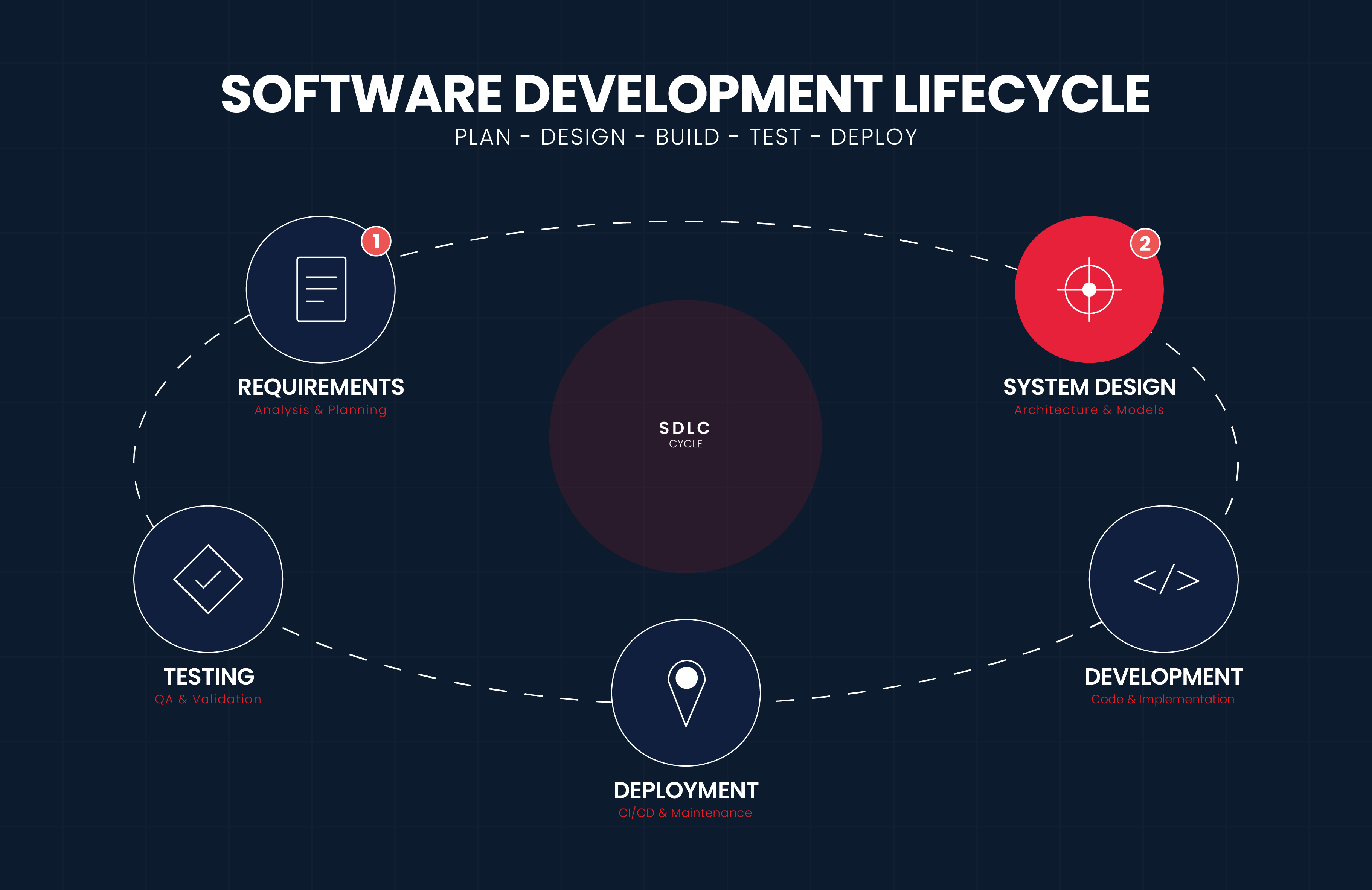
The software development lifecycle connects planning, design, development, testing, and deployment to manage software applications across enterprise systems and business processes.
Requirement Analysis Planning
This phase defines what the software application needs to achieve within business processes and enterprise systems. Teams gather requirements, study workflows, and align goals with product development and data-driven decision-making to ensure clarity before system design begins.
System Design Architecture
Here, teams plan how the system will work at a structural level. This includes system design, data models, microservices architecture, API integration, and cloud computing setup to ensure scalability, performance, and alignment with IT infrastructure.
Code Development Implementation
Developers build the software application based on design specifications. Using version control systems, coding standards, and software engineering practices, they create features that integrate with enterprise systems, APIs, and business logic.
Testing Quality Assurance
Software testing ensures that applications function correctly within business processes and system environments. Teams perform functional testing, integration testing, and performance checks to maintain quality, reliability, and consistency across software applications.
Deployment and Maintenance
Once tested, applications move into deployment using continuous integration and continuous deployment pipelines. After release, monitoring systems track performance, while updates and maintenance ensure the software remains aligned with business needs and evolving enterprise systems.
Which Technologies Are Transforming Modern Software Development?
Modern software development is shaped by technologies that change how software applications are built, deployed, and scaled across enterprise systems and cloud computing environments.
AI-Driven Development
AI supports software development by assisting in code generation, error detection, and software testing. It analyzes patterns in code and data, helping developers improve accuracy and speed. Integrated with development tools, it enhances software engineering workflows and supports better decision-making during product development.
Cloud Microservices Architecture
Cloud computing, combined with microservices architecture, allows software applications to run as independent services. Each service handles a specific function and communicates through APIs. This structure improves scalability, supports continuous deployment, and ensures systems remain flexible across the distributed IT infrastructure.
API-First Architecture
API-first design focuses on building APIs before developing the full application. This ensures that different systems, services, and applications can connect easily. It improves integration across enterprise systems and supports consistent data flow between platforms and business processes.
Automated Testing Deployment
Automation in software testing and deployment uses continuous integration and continuous deployment pipelines to validate and release code. It ensures that software applications are tested consistently and deployed efficiently, improving reliability across development environments and reducing manual intervention.
Low-Code Platforms
Low-code platforms allow teams to build software applications using visual interfaces and predefined components. They reduce the need for manual coding while still supporting integration with enterprise systems, APIs, and data sources. This approach speeds up application development and supports faster delivery within business environments.
Final Words
Software development now drives how businesses run applications, manage business processes, and scale enterprise systems. If you reflect on What is software development?, it connects software engineering, IT infrastructure, and product development to real outcomes, supporting digital transformation, automation, and data-driven decision-making across modern organizations.
Key FAQ’s
What does software development look like inside a business?
It involves building and managing software applications that support business processes and connect enterprise systems across daily operations.
How is software development different from using ready-made tools?
Ready-made tools solve general needs, while software development creates solutions tailored to specific business processes, systems, and goals.
How long does software development take to show business impact?
Impact starts when software applications begin improving workflow automation and data flow across business processes and enterprise systems.
Can software development improve existing systems or only build new ones?
It enhances existing enterprise systems through integration, optimization, and feature updates while also supporting new application development.
Why is software development closely connected with data and analytics?
Software applications collect and process data, which supports data-driven decision-making across business processes and enterprise systems.
Muhammad Shayan Ahmad, Solution Architect and Sr Software Engineer at CodeFulcrum, bringing over 7+ years of expertise in AI-powered software architecture, full-stack innovation, and emerging technologies.