Table of Contents
Thank you! Your submission has been received!
Oops! Something went wrong while submitting the form.

Published:
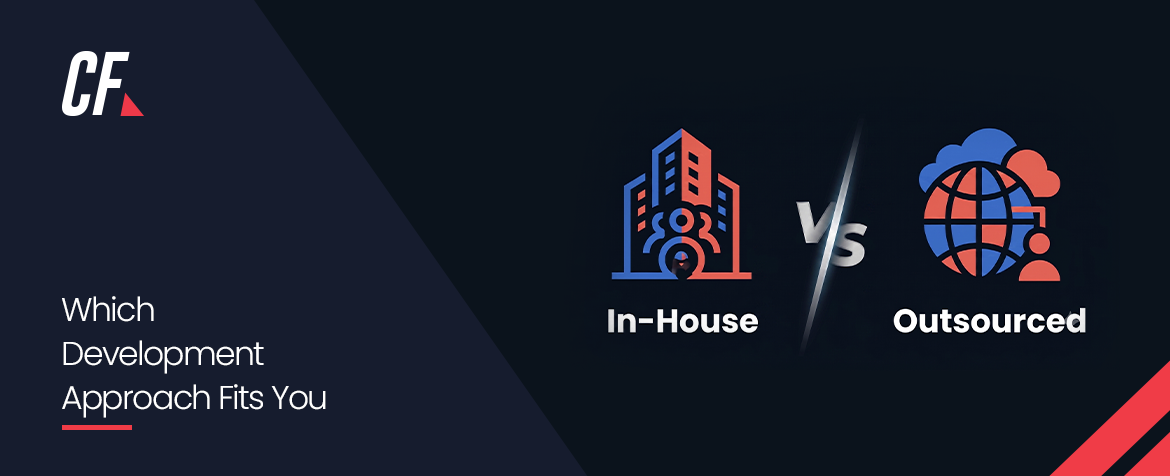
In-house vs outsourced software development and modern outsourced software development services have become key considerations for businesses building digital products.
Companies now focus on scalable software development, faster product delivery, and access to global talent.
Remote developers, Agile workflows, DevOps practices, and AI-assisted development are also shaping software engineering strategies. In this article, you will explore how both development models support product growth, operational efficiency, and long-term business goals.
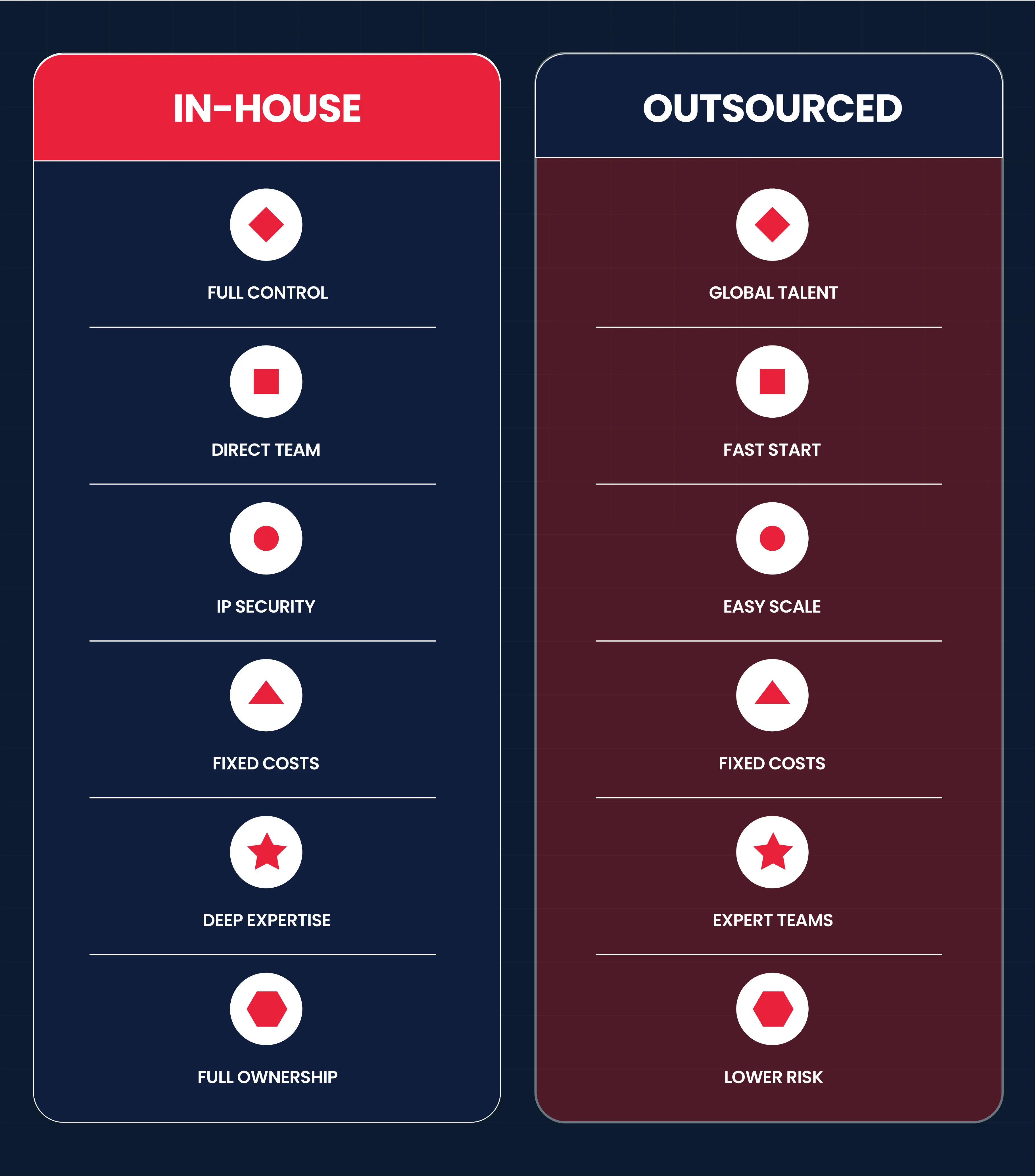
In-house software development refers to a software development model where an internal development team manages product development, software engineering, testing, and deployment within the company.
Businesses use dedicated employees and direct collaboration to align software architecture, Agile workflows, DevOps practices, and long-term product ownership with their operational goals and development strategy.
Outsourced software development is a software development model where businesses work with external teams, dedicated partners, or offshore development companies to manage product development and software engineering tasks.
Companies use outsourced development for flexible resources, specialized expertise, agile delivery, cloud-native development, and faster access to remote developers across different technologies and project requirements.
Development costs in in-house vs outsourced software development depend on hiring structure, operational spending, infrastructure ownership, and long-term product strategy.
An internal development team usually requires direct investment in recruitment, software engineering tools, DevOps infrastructure, cloud platforms, onboarding, and employee retention.
Outsourced development shifts many of these responsibilities to a dedicated development team or offshore development partner, creating a more flexible operational model.
This table represents the cost of both software development models:
Product delivery depends on development speed, engineering workflows, team availability, and how efficiently software development resources scale with demand.
In-house: Internal development teams usually require longer hiring, onboarding, and workforce planning before software development starts.
Outsourced: Dedicated development teams and remote developers can join product development workflows much faster through established outsourcing partners.
In-house: Direct collaboration between dedicated employees supports faster communication during software engineering and product planning.
Outsourced: Experienced outsourced development teams often speed up delivery through mature DevOps workflows and cloud-native development practices.
In-house: Internal development teams align closely with Agile planning, product ownership, and business objectives during software development cycles.
Outsourced: Outsourced software development companies usually follow structured Agile workflows with continuous integration and automated testing pipelines.
In-house: Scaling an internal development team depends on hiring availability, technical recruitment, and workforce expansion timelines.
Outsourced: Staff augmentation and offshore development models allow businesses to scale software engineering resources more efficiently.
In-house: Internal software engineering teams maintain direct oversight of release management, software architecture, and deployment planning.
Outsourced: Outsourced development teams commonly use CI/CD pipelines, AI-assisted development tools, and automated workflows for faster software releases.
Business scalability depends on how quickly software development teams adapt to growth, changing workloads, and evolving product development demands.
In-house: Expanding an internal development team usually involves recruitment cycles, onboarding, and long-term workforce planning across software engineering roles.
Outsourced: Outsourced development companies can quickly provide remote developers, DevOps engineers, and dedicated development teams for growing projects.
In-house: Internal hiring often depends on local talent availability and regional software engineering markets.
Outsourced: Offshore development and distributed engineering teams give businesses access to a wider global talent pool and specialized technical expertise.
In-house: Internal software development teams typically follow fixed operational structures and predefined resource capacity throughout the software development lifecycle models.
Outsourced: Staff augmentation and outsourced development models support flexible scaling based on product development timelines and changing business priorities.
In-house: Businesses directly manage software architecture, Agile workflows, engineering productivity, and internal collaboration across development operations.
Outsourced: Outsourcing partners manage resource allocation, technical staffing, and operational workflows while supporting continuous software delivery.
In-house: Internal development teams maintain strong product ownership and long-term alignment with software development strategy and business operations.
Outsourced: Outsourced software development supports faster expansion, cloud-native development adoption, and scalable engineering support for growing digital products.

Let's help you determine whether in-house, outsourced, or hybrid software development is the best fit for your business, budget, and long-term goals.

A hybrid software development process helps businesses balance product ownership, technical expertise, scalability, and faster software delivery across evolving projects.
Internal development teams manage product direction and business priorities while outsourced development teams support software engineering and delivery execution.
Companies can expand the software development process with dedicated developers, DevOps engineers, cloud specialists, and AI-assisted development expertise.
Businesses maintain control over software architecture, Agile workflows, SDLC planning, and engineering standards throughout the development lifecycle.
Outsourcing partners contribute specialized technical knowledge, modern development practices, and distributed engineering support for complex software development needs.
This software development process for scalable applications supports flexible resource allocation, continuous delivery, and scalable engineering operations across changing business demands.
Choosing in-house vs outsourced software development depends on your product goals, software development process, scalability needs, and operational strategy. Some businesses prefer internal product ownership, while others benefit from outsourcing software development for faster delivery and flexible engineering support.

Industries with fast-changing product requirements, including fintech, healthcare, SaaS, ecommerce, and cloud platforms, often use outsourced development for faster engineering support and specialized technical expertise.
Modern collaboration platforms, Agile workflows, and DevOps practices help remote developers maintain consistent communication across distributed software engineering teams.
Staff augmentation helps businesses expand their internal development team with specialized software engineering talent while maintaining direct product ownership and operational control.
Technical debt increases long-term maintenance effort, slows software delivery, and affects software architecture scalability across growing digital products and SDLC operations.
AI-assisted development supports faster code generation, automated testing, workflow automation, and improved engineering productivity across modern software development environments.