
Table of Contents
Thank you! Your submission has been received!
Oops! Something went wrong while submitting the form.

Published:

Let’s discuss how we can help you craft a winning product strategy tailored to your goals.

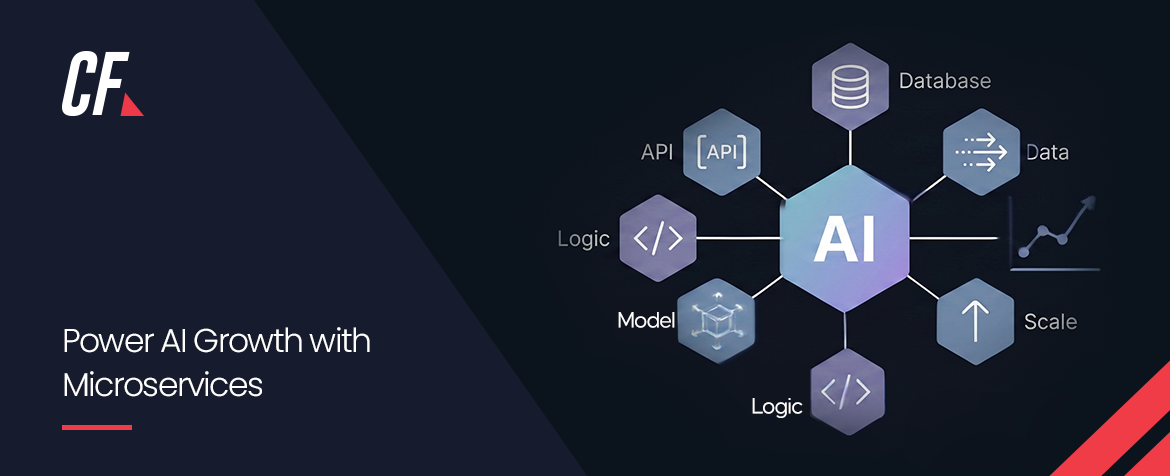
AI infrastructure works in layers where compute, data, and inference systems connect through orchestration, so everything runs in sync. Reliable data pipelines depend on strong data engineering to keep AI systems consistent and ready for real workloads.
This is where compute runs across CPU and GPU workloads inside distributed systems. Kubernetes manages container orchestration, autoscaling, and resource allocation, which keeps workloads balanced and improves GPU utilization.
This layer keeps data ready for models. Data pipelines move data across systems, while a feature store keeps features consistent for training and inference. Batch processing and stream processing support continuous data flow.
This layer manages how models move through the system. Training pipelines and validation workflows build models, while a model registry tracks versions. ModelOps connects training with production in a structured way.
This layer powers model serving through inference systems. It handles real-time APIs, request routing, and load balancing so responses stay fast and scalable.
This layer tracks system activity using metrics, logging, and tracing. It monitors model performance, supports drift detection, and maintains system reliability across AI infrastructure.

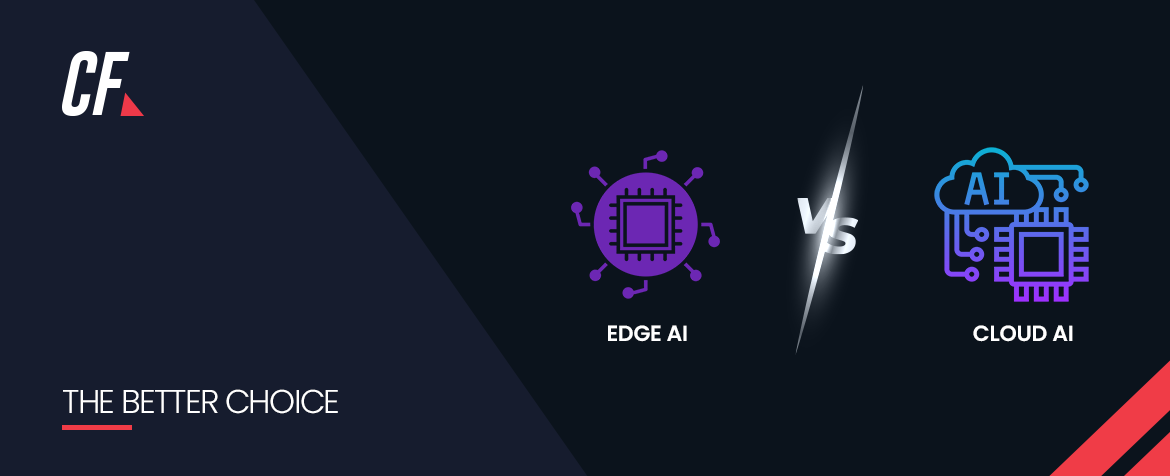
Confused between edge AI vs cloud AI? Learn the key differences, performance trade-offs, and real use cases to choose the right approach for your business.
Observability in AI systems connects metrics, logs, and traces so teams can understand model behavior across inference systems and distributed systems.
AI scaling depends on how well systems connect and run together. Cloud native AI and microservices support scalable AI systems, helping models, data pipelines, and infrastructure handle real production workloads with steady performance.

GPU scheduling improves resource usage by assigning workloads efficiently, which helps inference systems run faster under changing demand.
ModelOps manages model lifecycle and deployment, keeping updates aligned with production systems and maintaining consistent performance.
Data locality keeps data close to the compute, which improves speed and supports smoother processing in distributed systems.
A feature store provides consistent data for training and inference, which helps models perform reliably across environments.
An API gateway manages requests between services, which keeps communication structured across inference systems and a microservices architecture.


